Download The Defeat of the Ottoman Empire in World War I: The History of the Allied Victories that Led to the Collapse of the Turkish Empire - Charles River Editors file in ePub
Related searches:
10 Battles That Shaped the Ottoman Empire RealClearHistory
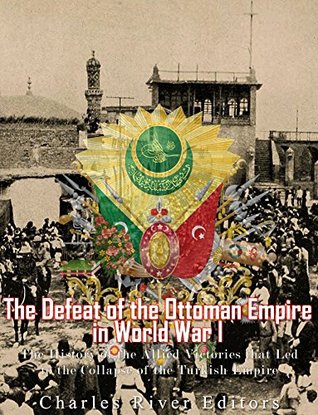
The Defeat of the Ottoman Empire in World War I: The History of the Allied Victories that Led to the Collapse of the Turkish Empire
Dissolution of the Ottoman Empire - Wikipedia
Six Reasons Why the Ottoman Empire Fell - HISTORY
The Defeat of the Ottoman Empire in World War I: The - Amazon.com
The decline of the Ottoman Empire, 1566–1807 Britannica
Ottoman Empire - Dissolution of the empire Britannica
Defeat and dissolution of the Ottoman Empire Military Wiki
List of battles involving the Ottoman Empire - Wikipedia
List of sultans of the Ottoman Empire - Wikipedia
The Ottoman Culture of Defeat Hurst Publishers
Why the Ottoman Empire rose and fell National Geographic
The Rise of the Ottoman Empire: Studies in the History of Turkey, thir
The Ottoman Culture of Defeat - Eyal Ginio - Oxford University Press
Amazon.com: The Defeat of the Ottoman Empire in World War I
Collapse of the Ottoman Empire, 1918-1920 - The Ottoman
The Dissolution of the Ottoman Empire, 1807-1924 Holocaust
The Rise and Fall of the Ottoman Empire
When 500 Knights Defeated 40,000 Soldiers From the Ottoman
The Ottoman Empire Flashcards Quizlet
The defeat of the ottoman empire in world war i: the history of the allied victories that led to the collapse of the turkish empire - kindle edition by charles.
In the 1700s, the ottoman empire began to rapidly deteriorate following the russo-turkish wars. A series of treaties created during that time caused the empire to lose some of its economic independence. The crimean war, which lasted from 1853 to 1856, further exhausted the struggling empire.
After almost two hundred years of croatian resistance against the ottoman empire, victory in the battle of sisak marked the end of ottoman rule and the hundred.
The period of defeat and dissolution of the ottoman empire (1908–1922) began with the second constitutional era with the young turk revolution. It restored the ottoman constitution of 1876 and brought in multi-party politics with a two stage electoral system ( electoral law ) under the ottoman parliament.
The defeat of the ottoman empire in world war i: the history of the allied victories that led to the collapse of the turkish empire kindle edition. Charles river editors (author) › visit amazon's charles river editors page.
The ottoman empire (/ ˈ ɒ t ə m ə n /; ottoman turkish: دولت عليه عثمانيه devlet-i ʿalīye-i ʿosmānīye, literally the sublime ottoman state; modern turkish: osmanlı imparatorluğu or osmanlı devleti; french: empire ottoman) was a state that controlled much of southeastern europe, western asia, and northern africa between the 14th and early 20th centuries.
At the start of world war i, the ottoman empire was already in decline. The ottoman army entered the war in 1914 on the side of the central powers (including germany and austria-hungary) and were.
During a period of decline, the empire lost much of its territory in southeastern europe and the balkans. After world war i� the ottoman empire collapsed, leading to the establishment of the modern republic of turkey in 1923 and to the creation of other new states in the middle east.
European encroachment on several former ottoman provinces such as algeria, libya, tunisia and egypt made the danger of a possible arab revolt relatively clear. The fall of the ottoman empire set the geopolitical scene of the new middle east. In 1920, two years after the end of the war, the region was already experiencing growing instability.
List of the main battles in the history of the ottoman empire are shown below. The life span of the empire was more than six centuries, and the maximum territorial extent, at the zenith of its power in the second half of the 16th century, stretched from central europe to the persian gulf and from the caspian sea to north africa.
They defeated the mamluks and took over egypt in 1517, thus gaining control over the entire eastern mediterranean. A year later they took over algeria, which gave them a convenient launch point for an attack on either italy of spain.
The turks fought fiercely and successfully defended the gallipoli peninsula against a massive allied invasion in 1915-1916, but by 1918 defeat by invading british and russian forces and an arab.
The war between the turks and the austrians finally ended with the defeat of the turks in 1699 and the treaty of aix-la-chappelle.
Ottoman empire - ottoman empire - dissolution of the empire: abdülhamid was deposed and replaced by sultan mehmed v (ruled 1909–18), son of abdülmecid.
An important factor in the decline was the increasing lack of ability and power of the sultans themselves.
'eyal ginio has masterfully composed a social history of one multi-ethnic society's reactions to an empire's collapsing place in the world.
When the first balkan war broke out in october 1912, few ottomans anticipated that it would prove to be a watershed moment for the empire, ending in ignominy,.
Europe became dominated by nation states with the rise of nationalism in europe. The 19th century saw the rise of nationalism under the ottoman empire which resulted in the establishment of an independent greece in 1821, serbia in 1835, and bulgaria in 1877-1878.
The battle of kars is considered by most historians to be the last major battle of the last major war between the ottoman empire and persia. The battle itself, in which persia won a pyrrhic victory, was fought by hundreds of thousands of soldiers on both sides.
Ottoman empire, empire created by turkish tribes that grew to be one of the most powerful states in the world in the 15th and 16th centuries. Its dynasty was founded by a prince (bey), osman, after the mongols defeated the seljuqs at the end of the 13th century.
The dissolution of the ottoman empire (1908–1922) began with the second constitutional era with the young turk revolution.
Fall of constantinople (may 29, 1453), conquest of constantinople by sultan mehmed ii of the ottoman empire. The byzantine empire came to an end when the ottomans breached constantinople’s ancient land wall after besieging the city for 55 days. The fall of the city allowed for ottoman expansion into eastern europe.
What are the countries does ottoman empire fight? the kingdom of hungary, austria, poland, lithuania, russia, roman, great britannia, french, and the most.
The death of the serbian emperor stefan dušan in 1355 left his successors too divided and weak to defeat the ottomans, despite an alliance with louis i of hungary and tsar shishman of bulgaria in the first european crusade against the ottomans.
10 jan 2020 finally, after fighting on the side of germany in world war i and suffering defeat, the empire was dismantled by treaty and came to an end in 1922,.
3 nov 2017 the ottoman empire officially ended in 1922 when the title of ottoman sultan was eliminated.
The armistice of 31 october 1918 ended the fighting between the ottoman empire and the allies but did not bring stability or peace to the region. The british were in control of syria, palestine and mesopotamia (iraq), and british, french and greek forces stood ready to march across the bulgarian border and occupy ottoman thrace and constantinople.
Post Your Comments: