Read online Funeral Customs: Their Origin and Development - Bertram Puckle file in PDF
Related searches:
Funerals and Burial Customs HowStuffWorks
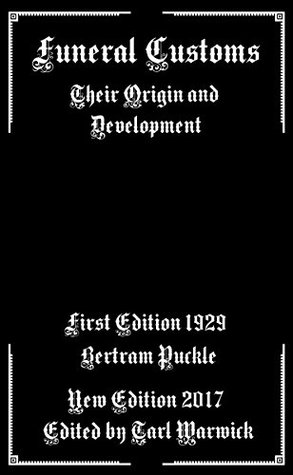
Funeral Customs: Their Origin and Development
Two Funerals And A Funeral
How to Be a Great Customer and Get Great Customer Service
Funeral Customs: Their Origin and Development: Puckle
Funeral Customs: Their Origin and Development by Bertram S
U.S. Funeral Customs and Traditions - Funeral Traditions
The History of Death and Burial Customs
OUTLINE OF FUNERALS; FUNERAL CUSTOMS: Their Origin and
Funeral Customs: Their Origin and Development - Bertram S
Funeral Customs : Their Origin and Development by Bertram
The History Of Funeral Rites And Rituals Of The Ancient World
Funeral Customs: Chapter VI: Funeral Feasts and Processions
Understanding Hindu Death Rituals and Customs - Farewelling
Traditional and Religious Death Practices in Western Turkey
African American Funeral and Mourning Customs in South Carolina
Jewish Funeral Customs Trust and Mourning Traditions - Weinstein
9781558887503: Funeral Customs: Their Origin and Development
Funeral Customs - Past and Present : Christian Courier
Military Funeral Honors, Customs, and Traditions
FUNERAL HOMES AND FUNERAL PRACTICES Encyclopedia of
See pictures of death and burial rituals from different cultures
Victorian Funeral Customs and Superstitions – Friends of Oak
Jewish Funerals and Burial Shiva, Jewish Mourning
Customs and Protocols on Death, Dying and Funerals
The Toraja people and the most complex funeral rituals in the
Jewish Funeral Traditions and Customs - A Guide
It’s difficult to pinpoint certain customs concerning buddhist funeral tradition, due the extensive variations between countries and sects. The most important factor to remember concerning the death of a buddhist, is to aid them in reaching the highest plateau possible in their next incarnation.
Buzzfeed illustrator/designer, international death is like an ill-fitting coat you can never remove.
From the time of death until burial a jewish body is never left unattended. Its preparation for burial (cremation is forbidden) is governed by a set of customs known as tahara. First the body is washed, symbolically purified by water, and finally dressed in a plain white shroud called a tachrichim.
Puckle's funeral customs is a comprehensive account of traditional funerary traditions and customs throughout history and from all over the world. From lost ancient practices to the first graveyards and cemeteries, this volume sheds light on how we as humans have dealt with death and the dead over the ages.
Cremation (often upon a funeral pyre) was particularly common among the earliest vikings, who were fiercely pagan and believed the fire’s smoke would help carry the deceased to their afterlife.
By tradition, hindus believe that death is a step in the process of soul rebirth. These ceremonies and rites support the loved one through the transition after.
Most states regulate the funeral home business closely, to protect consumers. To start your own funeral home you'll usually need to be trained and licensed, to have adequate facilities, and to meet any additional local requirements for cont.
With no great intellect or customs,the neanderthal man instinctively buried their dead with ritual and ceremony. This may suggest that neanderthals believed in an afterlife, but were at least capable of mourning, and were likely aware of their own mortality. The most ancient and universal, of funeral monuments, were simple and natural,.
Many funeral homes also have experience serving families from diverse cultural backgrounds with their own funeral rites and customs. If you're planning a funeral or memorial service in advance, you should research your product and service options of various funeral homes, cremation providers, and/or cemeteries in your area.
A funeral is a ceremony connected with the final disposition of a corpse, such as a burial or cremation, with the attendant observances. Funerary customs comprise the complex of beliefs and practices used by a culture to remember and respect the dead, from interment, to various monuments, prayers, and rituals undertaken in their honor.
This study explored the shift of attitudes and behaviors in african americans' funeral customs and rituals.
Funerals serve to help us come to grips with the death of a loved one by acknowledging the passing in a formal ceremony. A funeral is also a celebration of the life of the person you all knew. People often share fond memories of the person they loved, and in doing so help one another to find meaning in the wonders of life and death.
The vigil (or wake): a vigil is a prayer ceremony where friends and family gather together to pay their respects to the deceased and his or her family.
Here in america and in most of canada, we have funeral traditions that have stood the test of time for decades, even centuries. But our traditions are vastly different from those in other countries and cultures. This article looks at ethiopian funeral traditions and is part of a series that highlights how different cultures care for their dead.
The irish certainly have many, many funeral customs and superstitions about death and certainly they turned the idea of the wake into an artform – irish wakes sometimes became so rowdy that the corpse was taken out of the box and dragged around the dance floor, or a bottle or glass placed in his or her hand, or a hat on the head.
Rituals are condensed forms of experiences, tips of icebergs of meanings and social mechanisms for transformations.
The next day a service was held, then the coffin was carried to the village burial ground.
Forgotten books, 1926 - funeral rites and ceremonies - 199 pages.
We can help you learn about the jewish mourning traditions and incorporate the rituals and practices.
North and south america developed their own funeral practices, some of which are still in use today. The native american nations in north america generally believed that the soul would leave the body with help from rituals. The prevailing belief was that it takes four days for the soul to ascend to happiness.
And they, like all human cultures, memorialize the deceased and express their grief and mourning to cope with the loss.
From the time of adam and eve, until the days of abraham, the scriptures are silent as to how our early ancestors disposed of their dead. The first explicit reference to burial is in conjunction with the death of sarah: “and abraham rose up from before his dead [sarah], and spake unto the children of heth, saying, i am a stranger and sojourner with you: give me a possession of a burying.
The blue field of the flag is placed at the head of the casket, over the left shoulder of the deceased. The custom began during the napoleonic wars of the late 18th and early 19th centuries when a flag was used to cover the dead as they were taken from the battlefield on a caisson.
Burial and mourning customs among jews of europe and nearby communities. In: studia in order to examine the accurate historical origins of many of them,.
“strange as it seems, it is in their cremation ceremonies that the balinese have their greatest fun,” miguel covarrubias wrote in the 1937 book, island of bali. In 2008, the island saw one of its most lavish cremations ever as agung suyasa, head of the royal family, was burned along with 68 commoners.
Learn about the rich traditions and rites of buddhist funerals. Plus, get information on buddhist funeral etiquette and see our frequently asked questions.
Created in the early 20th century, it casts a rational and skeptical glance at the superstitions of burial practices and cremation alike, and lists in some detail the customs of death over time and changes to them during the black death and then-modernity among other eras.
Outline of funerals; funeral customs: their origin and development.
Stop treating employees like they’re your personal servants or inferior, and you might be very happy with the results. An award-winning team of journalists, designers, and videographers who tell brand stories through fast company's distinct.
And mediterranean edited by nicola laneri with contributions by nicola laneri.
Funerary customs comprise the complex of beliefs and practices used by a culture to remember the dead, from the funeral itself, to various monuments, prayers, and rituals undertaken in their honor.
History of american funeral customs a funeral is defined as a ceremony which marks a persons death. According to research, funeral rites have been around for at least 300,000 years. A funeral can include prayers, memorials, and various rituals, and among different cultures, funeral customs vary greatly.
(office of origin: ca/ocs) nationals, consular officers should consult locally employed staff for cultural insights about local mourning customs. Because you may face death and loss, it is important to understand the grieving proc.
The traditional chinese mourning period; the role of a feng shui master in a funeral and burial; what flowers to send; the burning of joss paper.
Once the ultimate status symbol for high-end wallets, the original gold card has been eclipsed by other premium products — including from american express. We believe everyone should be able to make financial decisions with confidence.
Funeral planning is extra stressful, considering the fact that you are doing it through grief. Noah silliman / unsplash death is one of the most difficult things to plan for because you’re often.
The bathing ceremony is the first step of the funeral, which happens soon after death. The purpose of the bathing ceremony is to pay respect to the dead. Most who attend the bathing ceremony are family members and close friends. During the ceremony, attendants pour “holy water” onto the hand of the dead while saying their goodbyes.
On their deathbed, a muslim is encouraged to say the shahaadah, a declaration of faith. Once dead, funeral rites and the burial must take place as soon as possible.
In funeral services, a viewing (sometimes referred to as calling hours, reviewal, funeral visitation in the united states and canada) is the time that the family and friends come to see the deceased after they have been prepared by a funeral home.
Some of the rituals which we now practice as a sign of respect to the deceased, may also be rooted in a fear of spirits. Beating on the grave, the firing of guns, funeral bells, and wailing chants were all used by some cultures to scare away other ghosts at the cemetery.
Feb 3, 2016 “the modern westerner has lost loss,” she writes. And examining the customs of others, she thinks, might help us to see our own traditions with.
Contemporary american funerals often assume the character and roles of festival� that presents a paradox in conflict with traditional perceptions of ritual behaviors.
Before the funeral, the mourners tear their upper garment as a symbol of mourning ( keri'ah). The funeral service, now often conducted in the vernacular, varies according to the age of the deceased. A male child who died before he was seven days old is circumcised and given a hebrew name at the cemetery ( haggahot maimoniyyot� milah 1:15).
In an ethnological study of settlers their origin, time of emigration and national composition of settlements should be taken into account.
It is fitting and right that firefighters, who put their lives at risk daily for the public, should be given the proper respect upon their passing. A large part of this respect includes fire department traditions, which play an important role in honoring firefighters who have passed.
Mourning customs also influenced home décor during victorian times, as shown in a collection of clocks, portraits and quilts.
A memorial service, often called a funeral and often officiated by clergy from the decedent's or bereaved's church or religion. A funeral may take place at either a funeral home, church or even someone's home.
We look at some of the funerals and burial customs of the past and present. Advertisement we look at some of the funerals and burial customs of the past and present.
Their ancient traditions involve funerary customs that have been practiced over many centuries and are known to be the most complex funeral traditions in the world. The population of the toraja is approximately 650,000, of which 450,000 still live in the regency of tana toraja (“land of toraja”).
The pagan ritual of cutting and tattooing at funerals was believed to assist in passage to the realm of the dead. Eric william's 2005 article, another hole in your head, the practice allowed the person to cheat death of the spirit while giving the dead a dramatic send-off.
The saxons of early england cut off the feet of their dead so the corpse would be unable to walk. Some aborigine tribes took the even more unusual step of cutting off the head of the dead, thinking this would leave the spirit too busy searching for his head to worry about the living.
Mar 15, 2016 in upernavik, the soil is too hard to bury the dead. Instead, they are laid to rest in concrete and stone-covered coffins above ground.
Below are some of the scottish burial customs with origins in old age superstitions that existed in many cultures of the world.
The majority of the literature review is on death rituals and practices in turkey where the primary religion is islam.
Funeral rites: an overview death is not only a biological occurrence leaving the corpse as a residue that must be administered to; it is also, and more.
The catholic funeral rite is called the order of christian funerals. Family and friends pray for the soul of the deceased person and ask god to receive their soul into his eternal glory. The vigil of the deceased (a prayer service) is held the night before the funeral. On the day of the funeral a requiem mass for the deceased person is celebrated.
Funerary customs comprise the complex of beliefs and practices used by a culture to remember the dead, from the funeral itself, to various monuments, prayers, and rituals undertaken in their honor. These customs vary widely between cultures, and between religious affiliations within cultures.
Oct 2, 2020 the purpose of this study was to examine the reported ritual practices (dealing with the deceased's remains, wake, funeral, burial and celebration).
Much as it may have been contributed to the continuation of the usage, hospitality was certainly not the origin of the funeral feast. The special object of the gathering was largely for the purpose of offering prayers for the soul, in the actual presence of the body, till the burial.
Elizabeth i was not even three years old when her mother was killed by her father -- and she was to witness several more deaths during her lifetime.
The philippines also has the “tinguian funeral,” where “people dress the dead in their finest clothes, sit them in a chair, and give them a smoke. ” jade burial suit, han dynasty china “royal members of the han dynasty were buried in ceremonial suits of jade.
Jul 16, 2018 in human societies, 'necrophoresis' is performed via the funeral ceremony. In pre- modern societies, relatives and local community members.
Post Your Comments: