Download The Public Good and the Brazilian State: Municipal Finance and Public Services in São Paulo, 1822–1930 - Anne G. Hanley file in PDF
Related searches:
The Public Good and the Brazilian State: Municipal Finance and
The Public Good and the Brazilian State: Municipal Finance and Public Services in São Paulo, 1822–1930
The Public Good and the Brazilian State: Municipal - Amazon.com
The Public Good and the Brazilian State - De Gruyter
Anne G. Hanley, The public good and the Brazilian state: municipal
The Public Good and the Brazilian State: Municipal - EH.Net
Sumner on Hanley, 'The Public Good and the Brazilian State - H-Net
The Public Good and the Brazilian State - IDEAS/RePEc
Anne G. Hanley. The Public Good and the Brazilian State
The Public Good and the Brazilian State on Apple Books
Explanatory Notes in: The Public Good and the Brazilian State
Data sets for The Public Good and the Brazilian State
Public Good Allocation and the Welfare Costs of Political
Climate Change and Public Policies in the Brazilian Amazon - MDPI
The Public Good and the Brazilian State eBook by Anne G
Tropical Deforestation: Markets and Market Failures - JSTOR
Electoral Competition and Local Government Responsiveness in
Implementation challenges in protecting the global environmental
Public money for the public good - ICAEW
DEFENDING PUBLIC PROSECUTORS AND DEFINING BRAZIL'S
Visualizing How the Brazilian Government Underspends on the
Who Benefits from the Public Good? How OER Is Contributing to
This page has supplementary data files for the public good and the brazilian state: municipal finance and public services in sao paulo, 1822–1930.
The public good and the brazilian state: municipal finance and public services in são paulo, 1822–1930 (markets and governments in economic history).
Public good allocation and the welfare costs of political connections: evidence from brazilian matching grants michel azulaiy thursday 16th november, 2017 job market paper.
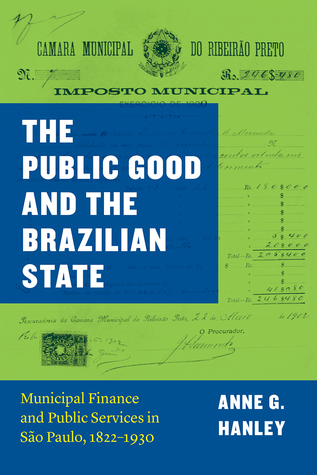
The public good and the brazilian state demonstrates that an analysis of durable inequalities in brazilian society must include the system of tax collection and revenue distribution that emerged following independence—a system that saddled municipal governments with the responsibility for providing crucial services but left them with resources that were woefully inadequate to the task, even in brazil’s burgeoning coffee zone.
Hanley, the public good and the brazilian state: municipal finance and public services in são paulo, 1822-1930.
3 (a) using examples, explain the difference between merit goods and public goods and show why it is possible for profit to be made in the supply of one of these types of good but not the other. [8] for knowledge and understanding of both merit goods and public goods with appropriate examples (up to 4 marks).
Hanley assembles an economic history of public revenues as they developed in nineteenth-century brazil.
It argues that the fiscal structure of the brazilian state, which rested on an array of indirect taxes on the local economy, generated wide disparities in the capacity to invest in public goods and contributed to brazil’s enduring inequality.
The public good and the brazilian state: municipal finance and public services in são paulo, 1822–1930 (markets and governments in economic history) kindle.
, the public good and the brazilian state: municipal finance and public services in são paulo, 1822–1930 ( chicago and london: university of chicago press, 2018.
The public good and the brazilian state demonstrates that an analysis of durable inequalities in brazilian society must include the system of tax collection and revenue distribution that emerged following independence—a system that saddled municipal governments with the responsibility for providing crucial services but left them with.
The public good and the brazilian state: municipal finance and public services in são paulo, 1822–1930.
Brazil's environmental public interest: a review of lesley mcallister's.
Hanley, the public good and the brazilian state: municipal finance and public services in são paulo, 1822–1930.
A categorisation of local government services on the basis of their public good characteristics would find relatively few pure public goods but more impure public goods or club goods. Libraries, museums, art galleries and swimming pools, for example, have some public good elements.
The public good and the brazilian state is an extraordinarily original and impeccably researched deep dive into the workings of brazil’s political and fiscal institutions at the local level. Its findings make the pattern and trajectory of spending on human development intelligible in a way that simply could not be attainable otherwise.
Sia), the 1988 brazilian constitution established that the local government has verge to infinite, the public good (a good with diffuse benefits) is never offered.
Anne hanley’s most recent work, the public good and the brazilian state: municipal finance and public services in são paulo, 1822-1933, examines the ways that centralized government funding — or the chronic shortage thereof — shaped the establishment of public services in seven municipalities (counties) in the state of são paulo spanning from 1822 (the year that the empire of brazil gained its independence) to the end of the first republic in 1930.
Brazil - brazil - cultural life: the cultures of the indigenous indians, africans, and portuguese have together formed the modern brazilian way of life. The portuguese culture is by far the dominant of these influences; from it brazilians acquired their language, their main religion, and most of their customs. The indian population is now statistically small, but tupí-guaraní, the language.
Thus, in the brazilian example, it is possible that a growth in oer adoption among publishing houses participating in the pnld might not represent a reduction in public spending with educational resources, or that such reduction is not a fair share of the savings those companies achieved in their costs; in that scenario, the social benefits.
Post Your Comments: