Download Hunter-Gatherer Childhoods: Evolutionary, Developmental, and Cultural Perspectives (Evolutionary Foundations of Human Behavior Series) - Barry S. Hewlett file in ePub
Related searches:
Hunter-Gatherer Infancy and Childhood - Wymagajace.pl
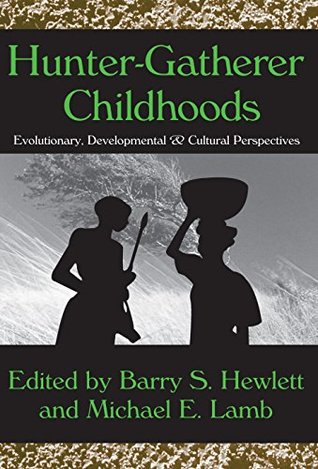
Hunter-Gatherer Childhoods: Evolutionary, Developmental, and Cultural Perspectives (Evolutionary Foundations of Human Behavior Series)
Hunter-Gatherer Infancy and Childhood in the - Melvin Konner
Hunter-gatherer Childhoods: Evolutionary, Developmental, and
Development of social learning and play in BaYaka hunter - Nature
Find Hunters And Gatherers On eBay - Free Shipping On Many Items
Farewell to the 'childhood of man': ritual, seasonality, and the origins
Past And Present In Hunter Gatherer Studies www.cep.unep.org
The Ecology of Playful Childhood - The Diversity and Resilience of
Social Learning and Innovation in Hunter- Gatherers - Department of
Exploring the primacy of child-to-child teaching among Hadza and
How Do Hunter-Gatherer Children Learn Social and Gender Norms
hunter-gatherer storage, settlement, and the opportunity - JSTOR
'You all go to check there' Research on Children and Social
[PDF] Hunter-Gatherer Infancy and Childhood : The !Kung and
Children often represent 40 percent of hunter-gatherer populations, thus nearly half the population is omitted from most hunter-gatherer ethnographies and research. This volume is designed to bridge the gap in our understanding of the daily lives, knowledge, and development of hunter-gatherer children.
Hunter gatherer childhoods this volume is designed to bridge the gap in our understanding of the daily lives, knowledge, and development of hunter-gatherer children. The twenty-six contributors to hunter-gatherer childhoods use three general but complementary.
Early infanticidal childrearing is a term used in the study of psychohistory that refers to infanticide in paleolithic, pre-historical, and historical hunter-gatherer tribes or societies.
In addition, hunter-gatherer children must learn how to navigate their huge foraging territory, build huts, make fires, cook, fend off predators, predict weather changes, treat wounds and diseases,.
Congo basin hunter-gatherer children are granted autonomy in their daily lives, while farmer children are subject to the control of parents and older children.
16 feb 2021 his research interests focus on childhood in the baka hunter– gatherer society of eastern cameroon, specifically regarding face-to-face.
When eteni, a 13-month-old baby living in the dense rainforests of congo, attempts to cut freshly hunted meat with a sharp knife, no one interferes.
In the vast anthropological literature devoted to hunter-gatherer societies, surprisingly little attention has been paid to the place of hunter-gatherer children.
Kung infancy and child- hood were representative of hunter-gatherers as described by classic ethnog- raphers, which i have called the hunter-gatherer childhood.
A striking feature of childhood in hunter-gatherer societies is how much time boys and girls spend together in multi-aged peer groups away from adults.
Reviving an earlier tradition of anthropological research, we argue that a key feature of hunter-gatherer social life has been.
5 feb 2020 in hunter-gatherer societies, where much of children's time is spent in a wanted to understand whether peer teaching occurred in childhood,.
Hunter-gatherer childhoods: evolutionary, developmental, and cultural perspectives (evolutionary foundations of human behavior series).
Edition description the twenty-six contributors to hunter-gatherer childhoods use three general but complementary theoretical approaches - evolutionary, developmental, cultural - in their presentations of new and insightful ethnographic data.
Carnivores but that the childhood and adolescence stages are relatively unique to humans.
The final part identifies and discusses the anthropological, developmental psychology and evolutionary biology theories that researchers used to guide their studies with congo basin hunter-gatherer children. Children represent about 40 percent of congo basin hunter-gatherer communities, but the vast majority of studies are conducted with adults.
Abstract in the vast anthropological literature devoted to hunter-gatherer societies, surprisingly little attention has been paid to the place of hunter-gatherer children. Children often represent 40 percent of hunter-gatherer populations, thus nearly half the population is omitted from most hunter-gatherer ethnographies and research.
Sellen published hunter-gatherer childhoods: evolutionary, developmental, and cultural.
9 oct 2017 specifically, our results emphasize the importance of children's playgroups for learning subsistence skills, especially in middle childhood.
Melvin konner� in the 1970s, based on research among the�kung san, then hunter-gather-.
Book description: in the vast anthropological literature devoted to hunter-gatherer societies, surprisingly little attention has been paid to the place of hunter-gatherer children. Children often represent 40 percent of hunter-gatherer populations, thus nearly half the population is omitted from most hunter-gatherer ethnographies and research.
Hunter-gatherer childhoods in a number of ways, childhood in hunter-gatherer societies appears to be more relaxed and easy-going compared with most food-producers. And, hunter-gatherer children appear to receive more warmth and affection from parents (rohner 1975, 97–105).
Children growing up in hunter-gatherer cultures have more opportunity to play than do children growing up in any other culture that anthropologists have observed (gray, 2012), and as they become.
At the end of middle childhood, children self-segregate into same-sex groups and begin to perform gender-specific tasks. We find evidence that foragers actively teach children social norms, and that, with sedentarization, teaching, through direct instruction and task assignment, replaces imitation in learning gendered behaviors.
1 jun 2020 in a number of ways, childhood in hunter-gatherer societies appears to be more relaxed and easy-going compared with most food-producers.
Title of course, children and childhood in a multicultural - global and local perspective hunter-gatherer childhoods: evolutionary, developmental, and cultural.
Hunter-gatherer societies in order to understand how children's play might er- gatherer childhoods: evolutionary, developmental, and cultural perspectives,.
Within many hunter-gatherer societies no intermediate 'adolescent' stage is perceived between childhood and adulthood.
31 jul 2019 from infancy to early childhood, hunter-gatherer children learn mainly by imitating and observing others' activities.
The twenty-six contributors to hunter-gatherer childhoods use three general but complementary theoretical approaches--evolutionary, developmental, cultural--in their presentations of new and insightful ethnographic data. For instance, the authors employ these theoretical orientations to provide the first systematic studies of hunter-gatherer children's hunting, play, infant care by children, weaning and expressions of grief.
29 jan 2021 hunter-gatherer children in the past: an archaeological review material culture relating to childhood, including children's playthings and tools,.
Hunter-gatherer childhoods: evolutionary, developmental, and cultural perspectives (evolutionary foundations of human behavior series) select format.
Hunter-gatherer childhoods, edited by barry hewlett and michael lamb.
Hunter-gatherer childhoods: evolutionary, developmental, and cultural perspectives what people are saying - write a review selected pages contents other.
Many other foraging groups – also known as hunter-gatherers – hold similar aka individuals followed from infancy at least through childhood, harkness says.
A striking feature of childhood in hunter-gatherer societies is how much time boys and girls spend together in multi-aged peer groups away from adults. Even when adults are close by, they rarely guide children’s activities. Instead, children learn through child-to-child teaching and by imitating adult activities in their play.
In fact, gray thinks we should return childhood to its formative roots and design learning environments around what he refers to as the core social values of hunter-gatherer society: autonomy, sharing, and equality.
In the vast anthropological literature devoted to hunter-gatherer societies, surprisingly little attention has been paid to the place of hunter-gathererchildren. Children often represent 40 percent of hunter-gatherer populations, thus nearly half the population is omitted from most hunter-gathererethnographies and research.
We find weak evidence that risk-taking increases in men as their mating opportunities increase. In both games, the sex difference widens throughout childhood.
Hewlett 2017-07-28 in the vast anthropological literature devoted to hunter-gatherer societies,.
In the vast anthropological literature devoted to hunter-gatherer societies, surprisingly little attention has been paid to the place of hunter-gatherer children. Children often represent 40 percent of hunter-gatherer populations, thus nearly half the population is omitted from most.
In the vast anthropological literature devoted to hunter-gatherer societies, surprisingly little attention has been paid to the place of hunter-gatherer children. Children often represent 40 percent of hunter-gatherer populations, thus nearly half the population is omitted from most hunter-gatherer ethnographies and research.
By the end of middle childhood, most children are proficient food collectors. However, it is not until adolescence that adults (not necessarily parents) begin directly teaching children complex skills such as hunting and complex tool manufacture. Adolescents seek to learn innovations from adults, but they themselves do not innovate.
The huffington post asserted that this may be due to an evolutionary need for chimps to “fulfill their ancient gender roles” (wolchover).
During the 1970s, ethnographers began to focus on non-western societies as they researched on other adaptation styles which are unique and representative of a whole genre of society. One such society was the�kung san, who were then the hunter-gatherers of northern botswana.
Human evolution – melvin konner: hunter-gatherer childhood and human evolution kung (bushmen) hunter-gatherers of northwestern botswana, the first.
This paper explores childhood social learning among aka and bofi hunter– gatherers in central.
Some features of�kung infancy and childhood appeared to be representative of hunter-gatherers as described by ethnographers, a set of generalizations that may be called the hunter-gatherer childhood (hgc) model. These descriptions, along with more quantitative studies of�kung.
As we will discuss, teaching may be crucial to the cultural transmission of foundational schemas during early and middle childhood.
Post Your Comments: