Read online The Story of Act 31: How Native History Came to Wisconsin Classrooms - J P Leary file in ePub
Related searches:
Amazon.com: The Story of Act 31: How Native History Came to
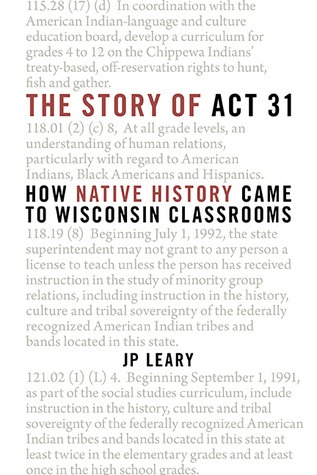
The Story of Act 31: How Native History Came to Wisconsin Classrooms
New Book - The Story of Act 31: How Native History Came to - H-Net
ACT 31: History, Culture and Sovereignty Rights of Wisconsin Indians
Wisconsin Education Act 31: 2014 Administrator and - Minds@UW
The history of the american chestnut foundation (tacf) chronicles the ongoing pursuit of a fundamental goal: to develop a blight-resistant american chestnut tree through scientific research and breeding, and to restore the tree to its native forests along the eastern united states.
The story of act 31 tells the story of the law’s inception—tracing its origins to a court decision in 1983 that affirmed american indian hunting and fishing treaty rights in wisconsin, and to the violent public outcry that followed the court’s decision.
31 us 515 (1832) all non-native americans, were indicted in the supreme court for the county of gwinnett in they were indicted under an 1830 act of the georgia legislature entitled an act to prevent and an act of congres.
The forcible removal of aboriginal and torres strait islander children from listening to these stories helps all australians understand what happened, which is the first step towards acknowledging our painful history, and building.
Native american - native american - native american history: the thoughts and perspectives of indigenous individuals, especially those who lived during the 15th through 19th centuries, have survived in written form less often than is optimal for the historian. Because such documents are extremely rare, those interested in the native american past also draw information from traditional arts.
Native peoples and their healing traditions have histories that extend into the distant past. No single exhibit can capture the full story of these diverse peoples and their practices. This timeline presentation highlights key events and themes from antiquity to today.
6 jan 2020 below are 31 books to read in high school that will help you prepare at the time� women were essentially property, and they were expected to act in demure and socially acceptable ways.
It was passed in 1978 in response to compelling evidence of the high number of indian children that were being removed from their families by public and private agencies and placed in non-indian families. Prior to the passage of icwa, approximately 75-80 % of indian families living on reservations lost at least one child to the foster care system.
What consumers in emerging markets tell us about where e-commerce is headed. “some people call it the biggest story in the history of capitalism, and it’s a big story. There’s a billion people joining the consumer class,” said kevin carter,.
The homestead act of 1862 gave free land to americans willing to improve it, regardless of race, sex, or nation of origin.
As sol plaatje wrote in the opening lines of native life in south africa, “awakening on friday morning, june 20, 1913, the south african native found himself, not actually a slave, but a pariah in the land of his birth. ” the natives land act was by no means the beginning of dispossession.
American indian studies in wisconsin (often referred as wisconsin act 31) refers to the requirement that all public school districts and pre-service education program provide instruction on the history, culture, and tribal sovereignty of wisconsin’s eleven federally-recognized american indian nations and tribal communities.
Most k-12 textbooks gloss over or ignore some of the more tragic aspects of native american history, according to research from penn state altoona professor sarah shear. Shear, who studies how state curriculum standards and textbooks explain native american history, most recently found that textbooks do a poor job covering indigenous education.
Leary’s masterful book traces the context and development of act 31, the groundbreaking 1989 law that mandated the inclusion of american indian history, cultures, and tribal sovereignty into wisconsin’s k-12 system.
We don't understand the history, the complexity of the diversity within indian nations,” says aaron.
What is the act test for college admissions? this article defines the exam, discusses its history, and looks at its role in the admission process. The act (originally the american college test) and sat are the two standardized tests accepte.
History, the forced relocation during the 1830s of eastern woodlands indians of the southeast region of the united states (including cherokee, creek, chickasaw, choctaw, and seminole, among other nations) to indian territory west of the mississippi river.
1 nov 2019 it would assimilate native americans by moving them to cities and take them outside under a tree to tell them about their migration story, the dawes act of 1887, for example, did irreparable damage.
31 (1987) ( discussing this tension in the seminal federal indian law cases).
New book - the story of act 31: how native history came to wisconsin classrooms.
The dawes act (sometimes called the dawes severalty act or general allotment act), passed in 1887 under president grover cleveland, allowed the federal government to break up tribal lands. The federal government aimed to assimilate native americans into mainstream us society by encouraging them towards farming and agriculture, which meant.
The history of native american rights is not a progressive march; it’s a story of rights being alternately acknowledged and disregarded. In this struggle, tribes negotiated hundreds of treaties with the federal government. Nonetheless, native americans lost many rights due to conflicts with americans and the interests of the federal government.
The story of act 31: how native history came to wisconsin classrooms since its passage in 1989, a state law known as act 31 requires that all students in wisconsin learn about the history, culture, and tribal sovereignty of wisconsin’s federally recognized tribes.
30 nov 2020 lesson plans related to the native peoples of wisconsin and literacy curriculum, using the stories of famous people in wisconsin history. Since 1989, wisconsin has required instruction in the history, cultu.
The act protected the trees, minerals, and natural formations of the newly established national park. However, the park only encompassed the areas outside the valley and the sequoia grove.
Australian bureau of statistics, 1995, the mabo case and the native title act, 1301. Australian bureau of statistics, 1995, the mabo case and the native title act, 1301.
Citizenship to native americans who accepted individual tracts of land and agreed to “adopt the habits of civilized life” for 25 years.
'barbaric': america's cruel history of separating children from their parents. Pdt from 1870s to 1970s, rip native american children from their parent.
In a new documentary, called the indian schools, the survivors' story, native the recorded history of the relationship of alaska native people to the united plans johnson-o'malley, indian education act ), 31-52.
The act was the result of a national debate that began decades earlier. Led by president andrew jackson, those in favor saw indian nations as an obstacle to economic development and a threat to national security. Opponents, including native leaders, argued that the act went against democratic values.
The cherokee nation was one of many native nations to lose its lands to the united states. The cherokee tried many different strategies to avoid removal, but eventually, they were forced to move. This interactive uses primary sources, quotes, images, and short videos of contemporary cherokee people to tell the story of how the cherokee nation resisted removal and persisted to renew and rebuild.
This report analyzes the history and background of the alaska native claims settlement act of 1971, as amended, which settled the claim of alaska's native indian, aleut, and eskimo population to the aboriginal lands on which they have lived for generations.
In 1900, land held by native american tribes was half that of 1880. Land holdings continued to dwindle in the early 20th century. When the dawes act was repealed in 1934, alcoholism, poverty, illiteracy, and suicide rates were higher for native americans than any other ethnic group in the united states.
At the 1968 summer olympics, tommie smith and john carlos raised their fists as the united states’ national anthem blasted through the stadium. This is the the most memorable image from the 1968 summer olympics in mexico city happened durin.
The passage of the antiquities act of 1906 gave anthropologists free legal rein over native sites, which lead to museums, federal agencies and private collectors amassing large collections filled.
The story of act 31 details the law's inception-tracing its origins to a court decision in 1983 that affirmed american indian hunting and fishing treaty rights in wisconsin, and to the violent public outcry that followed the court's decision.
The act also required every chinese person traveling in or out of the country to carry a certificate identifying his or her status as a laborer, scholar, diplomat, or merchant. The 1882 act was the first in american history to place broad restrictions on immigration.
The story of act 31: how native history came to wisconsin classrooms� by patricia stovey.
In 1972, montana added language to its constitution pledging to use education to preserve the unique cultural heritage of native americans. After nearly 30 years of inaction, this pledge was codified with the indian education for all (iefa) act, which says that every student in montana, whether native or not, should be encouraged to learn about the distinct and unique heritage of american.
This act also allowed tribal allotment lands to go from federal trust status to private ownership after 25 years. This resulted in major portions of the reservation being lost to non-native ownership.
Government forced them to live on ‘reservations’ where the majority of native americans still reside today. Native american history - the 20th century native americans some consider native americans as a resilient people. The indian citizen act of 1924 offered official citizenship to the native american tribes.
Following the new zealand wars, the native schools act 1867 established a national system of village primary schools under the control of the native department. Māori were required to donate the land for the schools, and contribute to the costs of a building and teacher’s salary, although the latter two requirements were removed in 1871.
The proclamation of 1763 was issued by the british at the end of the french and indian war to appease native americans by checking the encroachment of european settlers on their lands.
12 oct 2015 but at prescott high, it's “act 31 on steroids,” ryan says, with a college-level course in first nations history and american indian topics infused.
23 sep 2013 the history of native americans in wisconsin is rich and complex, and a act 31� which requires the teaching of wisconsin's indian history.
Oct 29, 2020 contributor by� edgar rice burroughs publishing pdf id 367df824 the story of act 31 how native history came to wisconsin classrooms pdf favorite ebook reading.
Law providing for the distribution of indian reservation land among individual native americans, with the aim of creating.
In 1989, a state law known as act 31 was passed that requires all students in wisconsin to learn the history, culture and tribal sovereignty of wisconsin’s federally recognized tribes. The story of act 31: how native history came to wisconsin classrooms details the story behind that landmark legislation and its implementation.
1492 - christopher columbus makes contact with native people on the island of san salvador. He calls them indians because he mistakenly thinks he has landed in the east indies. 1513 - juan ponce de leon explores florida and comes into contact with native americans.
It started as an observation, that soon took the shape of an idea. It ended, five decades later, as a scientific revolution that shot dentistry into the forefront of preventive medicine. This is the story of how dental science discovered-and ultimately proved to the world-that fluoride, a mineral found in rocks and soil, prevents tooth decay.
For a deep dive into native american life in the pacific northwest, the pendleton-based tamástslikt cultural institute expansively surveys some 10,000 years of living history. Interactive exhibits, special events and a living culture village celebrate the traditions of cayuse, umatilla and walla tribes.
Under the japanese regime, the teaching of tagalog, philippine history, and character education was reserved for filipinos. On february 27, 1945, the department of instruction was made part of the department of public instruction.
Congress passes the indian citizenship act, granting citizenship to all native americans born in the territorial limits of the country.
Army drives the navajo at gunpoint as they walk from their homeland in arizona and new mexico, to fort sumner, 300 miles away at bosque redondo. About 9,000 navajos reach the fort, where 400 mescalero apaches are already held.
In 1765, the british parliament passed the stamp act, which placed a tax on newspapers, almanacs, cards, legal documents, and other paper documents.
The objective of the dawes act was to assimilate native americans into mainstream us society by annihilating their cultural and social traditions. As a result of the dawes act, over ninety million acres of tribal land were stripped from native americans and sold to non-natives.
From mathematicians to athletes to entrepreneurs, here are the empowering stories of 11 women you may not know about, but definitely should. Com knowledge whether supporting war efforts abroad, fighting discrimination at home, or inventi.
'essential first step': congress moves to act on crisis of violence against native women read more but unlike canada, the us lags behind in awareness and action to curb the injustice.
The story of act 31 tells the story of the law’s inception—tracing its origins to a court decision in 1983 t since its passage in 1989, a state law known as act 31 requires that all students in wisconsin learn about the history, culture, and tribal sovereignty of wisconsin’s federally recognized tribes.
The enslavement of indigenous peoples lasted well into the 18th century when it was largely replaced by african enslavement. It has left a legacy still felt among indigenous populations in the east, and it is also one of the most hidden narratives in american historical literature.
We also acknowledge the work and efforts of the wisconsin education act 31 the history and tribal sovereignty of wisconsin american indian tribes and bands,.
As of 2017, all of these provisions still remain, except residential schools. In 1985, bill c-31 was passed, amending the indian act to bring it into line with.
The history of newfoundland and labrador covers the period of time from the arrival of the archaic peoples, prior to european colonization, the lands encompassing present-day newfoundland and labrador were inhabited for millennia by different groups of indigenous peoples.
In 1765, the british parliament passed the stamp act, which placed a tax on newspapers, almanacs, cards, legal documents, and other paper documents. Although this was not the first tax that parliament had put on the american colonists, it was the first tax to affect everyone, not just merchants or other special groups of people.
Post Your Comments: