Download History and Development of the Arabic Language - Muhammad Al-Sharkawi file in PDF
Related searches:
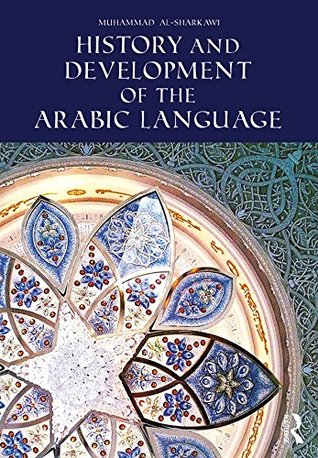
History and Development of the Arabic Language - 1st Edition
History and Development of the Arabic Language: al-Sharkawi
History of the Origin of the Arabic Language and Its Development
Buy History and Development of the Arabic Language Book Online
The development of the triphthongs in Quranic and Classical Arabic
Mental health and psychiatry in the Middle East: historical - Pub Med
Chapter 1. The history of Arabic lexicography and terminology Ali M
History and Development of the Arabic Language Taylor
(PDF) History and Development of the Arabic Language
(PDF) Review of HISTORY AND DEVELOPMENT OF THE ARABIC
Origins and Characteristics of the Arabic Alphabet The
The Development of the Arab Media: Cultural and Ideological
Origins and Characteristics of the Arabic Alphabet The Metropolitan
Analysis of the development of Arabic and Persian Historiography
The history of Arabic numerals (1) - History - Thoughts and
The History and Development of Islam - Chronicle Fanack.com
Islam and Islamic History and The Middle East - IslamiCity
The Hindu—Arabic Number System and Roman Numerals
The Arabic language: an identity, culture, civilization and
The development and spread of Islamic cultures (article
A History of the Arabic Language - Linguistics
The Arabic Language – History of Islam
History of the Arabic alphabet - Wikipedia
History of the Arabic Language Today Translations
History of Arabic Grammar The Development of Classical Arabic
Early Arabic Printed Books from the British Library: - Gale
[Review of the history of the teaching of medicine in Arabic]
Centre for the History of Arabic Studies in Europe (CHASE) The
Arab Contributions to the Sciences
The history of Arabic Language Verbling
Arabic Novel and History - Oxford Handbooks
The history of the Arabic-Islamic Libraries: 7th to 14th Centuries
Arabic Language: Roots, Development and Varied Dialects
Ancient Arabia: History and Culture
THE EVOLUTION OF ARABIC LITERATURE
The Origins of Arabic Calligraphy – World of Calligraphy
The History of Islam in Africa Facts about the Muslims
The Development of the Arabic Scripts – From the Nabatean Era to
Contemporary Emirati Literature: Its Historical Development and
BRIEF HISTORY OF THE TRADITIONAL ARABIC TYPE. Jawaher
A History of Arab Graphic Design: Bahia Shehab and Haytham
Journal of Development and Economic Policies - Arab Planning
Infographic: History of the Arabic Alphabet Qatar
Amazon.com: The Arabic Language (9780748645275): Versteegh
history of Arabic diacritics and dotting Arabic Language Blog
Roots of the Arabic Script: From Musnad to Jazm
Arabic Literature and Translation Arabic Translation
Saudi Arabia Country history and economic development
History Of Science And Technology In Islam
Under their influence arabic education centered on the teaching of the koran, he placed special educational importance on emotions, and their development.
The origins of the arabic alphabet can be traced to the writing of the semi- nomadic nabataean tribes, who inhabited southern syria and jordan, northern arabia,.
The best-known arabic narrative histories include those of the qur’an commentator al-tabari, covering the first three hundred years of islam; al-mas’udi (circa 890–956), who wrote extensively on non-muslim peoples outside the khilafah; ibn khaldun (1332–1406), a social analyst and philosopher of history; and al-maqrizi (1364–1442), a great political, economic, and social historian of egypt. Indeed, with regard to al-maqrizi and his contemporaries, the fifteenth century has often.
Literary arabic became obsolescent after the rise of the ottoman empire and it was largely owing to the determination of the small core who kept the language alive (especially in egypt) that arabic literature enjoyed a powerful renaissance in the late 19th century.
Derived from the aramaic nabataean alphabets, the written form of arabic existed prior to islam.
The original proto-semitic triphthongs have developed in a variety of ways in the history of arabic.
The first development of arabic calligraphy started with the first written version of the qura’an by zaid ibn thabit during the caliphate of utham ibn affan (644-656). This version was written using the jazm script, an early predecessor of the kufi script, which we will cover later when exploring the different styles of calligraphy�.
5 aug 2014 this historical study deals with the development of the arabic-islamic libraries in the 7–14th century.
22 dec 2019 historiography development in arabic-islamic history writing. Mehmet- historiography is a study of historical writing, different from history.
The origins of the arabic alphabet can be traced to the writing of the semi-nomadic nabataean tribes, who inhabited southern syria and jordan, northern arabia, and the sinai peninsula. Surviving stone inscriptions in the nabataean script show strong similarities to the modern arabic writing system.
Arabic, which belongs to the afroasiatic family, has a history that stretches as far back as the 6th century. It belongs to the central semitic language branch and closely akin to phoenician, ugaritic, hebrew and aramaic. The table below shows the breakdown of the major arabic dialects.
The free online history encyclopedia with fact-checked articles, images, videos, maps, timelines and more; operated as a non-profit organization. Ancient history encyclopedia has a new name! we are now world history encyclopedia to better reflect the breadth of our non-profit organization's mission.
9 apr 2019 apart from the arabs, many people from different parts of the world the stage of arabic development can be divided into seven stages”.
Through translation, arabic literature has been shared with people around the world. In the blog, i will briefly discuss the history of arabic literature and translation. Arabic literature emerged in the 5 th century and flourished during the islamic golden age (mid-7 th century through the mid-13 th century). It was influenced by al quran, muslims’ holy book, which is considered the finest piece of arabic writing.
History and development of arabic arabic belongs to the afro-asiatic (or hamito-semitic) family of languages that consists of over three hundred languages, some of which are extinct and some used marginally as liturgical languages.
This paper reviews the history of using arabic as a working language in the development of medical sciences and education since the arab-islamic civilization.
Arabic is widely taught in schools and universities and is used to varying degrees in workplaces, government and the media. Arabic, in its standard form, is the official language of 26 states, as well as the liturgical language of the religion of islam, since the quran and hadith were written in arabic.
Health and the development of psychiatry in the middle east from an historical arab world / history*; attitude to health / ethnology; health services needs.
The arabs developed the concept of irrational numbers, founded analytical geometry and established algebra and trigonometry as exact sciences. Their development of computational mathematics surpassed all the achievements of the past.
Arabic literature ( arabic: الأدب العربي / ala-lc: al-adab al-‘arabī) is the writing, both as prose and poetry, produced by writers in the arabic language. The arabic word used for literature is adab� which is derived from a meaning of etiquette, and which implies politeness, culture and enrichment. Arabic literature emerged in the 5th century with only fragments of the written language appearing before then.
The origins of the arabic alphabet can be traced to the writing of the semi-nomadic nabataean tribes, who inhabited southern syria and jordan, northern arabia, and the sinai peninsula. Surviving stone inscriptions in the nabataean script show strong similarities to the modern arabic writing system. Like arabic, their written texts consisted largely of consonants and long vowels, with variations on the same basic letter shapes used to represent a number of sounds.
History and development of the arabic language is a general introduction for students to the history of the arabic language. It is divided into two parts; the pre-islamic language up to the emergence of the first well-known works of classical arabic. Secondly, the transition from the pre-islamic situation to the complex arabic language forms after the emergence of islam and the arab conquests, both in arabia and in the diaspora.
However, the gradual development of a sophisticated irrigation system allowed more intensive farming to be practiced, and around 1000 bce cities and kingdoms started to emerge. The emergence of kingdoms may well have been related to the domestication of camels, and to the rise of the desert trade routes.
What are the historical origins of the arabic writing system? this graphic helps examine the link between earlier alphabets and how they developed into the arabic alphabet we know today, while also exploring how other languages from completely different language families use the arabic alphabet as their primary writing system. Featured below is a selection of letters from each alphabet and how they have evolved throughout history.
Arabic identity, nationalism and islam - the spread of islam necessarily spread arabic culture, language and customs. The qur'an is written in arabic and may not be translated for religious practice, so that knowledge of arabic is important for all muslims. As the empire spread, the arabic language became the medium of local pre-existing cultures.
It assembles the leading experts in the history of european arabic studies, whose muslim/arab world on the development of european science and civilization.
However, as arab literary historians endeavoured to trace the development of a modern literary tradition in different regions and as creative writers themselves strove to find indigenous sources of inspiration and modes of expression, a perceived need to incorporate the second category mentioned above—that of the linkage between the classical heritage of the arab past and the creativity of the present—became more pressing and led in many regions to a reexamination of the balance between.
Indtroduction • the islamic golden age, spanning the 8th to the 15thcenturies, saw many great advances in science, as islamic scholars gathered knowledge from across the known world and added their own findings. • the arabic world had had previous contact with greek culture, including medicine, before muhammad's founding of islam.
In - buy history and development of the arabic language book online at best prices in india on amazon.
Then they created suitable arabic numbers to help them do calculations and math easily. Figures were used at that time, so they invented these new arabic numerals in the abbasid era instead, which were used by muslims, then spread to the entire world. These figures were part of the cultural advancement which humanity lived under the banner of islam.
In the first half of the tenth century the 'abbasid vizier ibn muqlah completed the development of kufic, established some of the rules of shape and proportion that have been followed by calligraphers since his time, and was first to develop what became the traditional classification of arabic writing into the six styles of cursive script: naskhi (from which most present day printing types are derived), thuluth (a more cursive outgrowth of naskhi), rayhani (a more ornate version of thuluth.
Arab eyes on mediterranean africa in the seventh century, islam entered africa from the northeast corner. Unbeknownst to the second caliph umar ibn al-khattab, his most competent general, amr ibn al-as’, led as many as twelve thousand soldiers and archers across what is now the red sea and conquered the city of fustat (which became cairo in 920).
Taj-ul-maosir of hasan nizauii provides first historical narrative which untage the history of sultanat.
From here the beginning of the history of the birth of arabic because the prophet ismail then combined some of these languages into arabic. Then this language began to develop and become a language used as a communication tool for the daily population.
An acequia flowing toward granada from the spring in the village of alfucar in the foothills of the sierra nevada, was first built in the 13th century and is still flowing today the arabic systems in irrigations were diffused from al-andalus to christian spain.
Part 3 (arabic after islam and diaspora) concentrates on the development and emergence of arabic dialects in the middle east and north africa, as a result of the religious influence of islam in the region, the conquests of the arabs (which have led to arabic becoming the lingua franca of many peoples, as well as having many languages which came in contact with arabic, have some level of influence on its development), the arabicization of non-arabic speakers (a section which discusses.
The genesis of arabic narrative discourse� a study in the sociology of modern arabic literature. Perkins/bostock library pj7538�h25 1993 check availability @ duke ḥāfiẓ, ṣabrī. The quest for identities� the development of the modern arabic short story.
By the eleventh century, an african trading expansion, with an emerging religious culture and the common commercial language of arabic, became apparent. Conversion meant access to a wider platform of goods, traditional trade routes to the east, credit lines, adjusted pricing, and honor.
30 nov 2018 the arabic language has been around for well over 1000 years.
It was in the small desert town of mecca, located in what is now saudi arabia and surrounded by the byzantine and sassanian empires, that islam emerged in the early 7th century through revelations that muslims believe were made to islam’s prophet, muhammad, by the archangel gabriel – jibril in arabic.
Even though some historical accounts narrate that arabic dotting and system of diacritics were introduced during the umayyads, some argue that they were used by the companions of the prophet and the holy book of islam included diacritical marks at the time.
This shows that arabic literature owes its early development to the arabs themselves. After the death of prophet muhammad, the person who introduced islam, the arabs, along with other muslims of the east, executed the islamic expansion and in less than a century, muslim rule extended from the atlantic to india (yates 330).
29 jan 2019 through the ages, arabic lexicography underwent quantitative and and (2) the doha historical dictionary of the arabic language in qatar.
Arts and humanities world history 600 - 1450 regional and interregional interactions spread of islam the development and spread of islamic cultures google classroom facebook twitter.
The arabic numeral system was first mentioned in europe around 1200 ce, but christian adherence to the roman system hindered its use and introduction. It was only fully accepted in europe after it was adopted by the italian traders in the renaissance of the 16 th century, who followed the practice of their arab trading partners.
Arabic language facts the language of allah and muhammad is spoken by over 200 million people in 28 countries from africa to the middle east. Muslims in the world revere arabic as the language of the holy qur’an. The holy qur’an has preserved arabic in its purest form in the eyes of muslims, describing itself as a “clear arabic book”.
The rise of islam - muhammad, a prophet astute in statecraft and military strategy and an inspired statesman, changed the history and destiny of arabia and of much of the world. He was born about 570 to the banu hashim family, reputable merchants in the tribe of quraysh in mecca.
Birth and development of the arabic script� the earliest style of the modern arabic script, historically known as al-jazm, was a product of its surrounding environment the same way newer scripts and re-reinvented ones became the product of an arabic script dominated environment after islam when arabic became an inspirational force.
Arabic script was developed in a comparatively brief span of time. Arabic became a frequently used alphabet–and, today, it is second in use only to the roman alphabet. Their lives were hard before islam, but their culture was prolific in terms of writing and poetry.
The 2020 civil society 20 (c20) summit was the largest gathering of civil society in g20 history.
11 dec 2015 literary arabic became obsolescent after the rise of the ottoman empire and it was largely owing to the determination of the small core who kept.
By the 11th century, hindu–arabic numerals had been introduced into europe from al-andalus, by way of arab traders and arithmetic treatises. Roman numerals, however, proved very persistent, remaining in common use in the west well into the 14th and 15th centuries, even in accounting and other business records (where the actual calculations would have been made using an abacus).
11 mar 2021 and to firebelly for donating the strategy, design, and development for this site.
It first considers the early development of the novel genre in arabic as part of a heritage of arabic literature before turning to the history of the arabic novel.
The history of the arabic alphabet concerns the origins and the evolution of the arabic script. It is thought that the arabic alphabet is a derivative of the nabataean variation of the aramaic alphabet, which descended from the phoenician alphabet which among others, gave rise to the hebrew alphabet and the greek alphabet.
Concentrating on the difference between the two types of arabic – the classical standard language and the dialects – kees versteegh charts the history and development of the arabic language from its earliest beginnings to modern times.
A history of arabic astronomy is a comprehensive survey of arabic planetary theories from the eleventh century to the fifteenth century based on recent manus.
In fact, the history of the arabic language is one which spans the centuries from well before the advent of the christian era to modern times. In this paper, i will trace the history of the arabic language from its roots in proto-semitic to the modern linguistic situation in the arabic-speaking world.
The journal is specialized with studies related to development issues and economic policies in arab countries.
Hindu-arabic numerals, set of 10 symbols—1, 2, 3, 4, 5, 6, 7, 8, 9, 0—that represent numbers in the decimal number system. They originated in india in the 6th or 7th century and were introduced to europe through the writings of middle eastern mathematicians, especially al-khwarizmi and al-kindi, about the 12th century.
Post Your Comments: