Download Culture and Society in Later Roman Antioch (None) - Isabella Sandwell | PDF
Related searches:
Culture and Society in Later Roman Antioch on JSTOR
Culture and Society in Later Roman Antioch (None)
Culture and Society in Later Roman Antioch - Oxbow Books
Culture and Society in Later Roman Antioch (None): Sandwell
Culture and Society in late Roman Antioch - Open Research Online
02: Culture and Society in Ancient Rome – HIST 143: Foundations of
Society and Culture in Late Antique Gaul: Revisiting the Sources - 1st
The Legacy of Ancient Rome's Culture and Society – Brewminate
Social and Cultural Transformations - A History of the Later Roman
Ancient Rome - Culture and religion Britannica
Classical Culture and Society Major and Minor Haverford College
Themes in Roman society and culture : an introduction to ancient
Houses and Society in the Later Roman Empire October 2011
Roman Society under the Republic: Conflict and Change - TimeMaps
Innovation and Society in the Roman World - Oxford Handbooks
Culture and society in later Roman Antioch. Papers from a
HIST 3293 - World of Late Antiquity: Culture and Society in
(PDF) “Bishops, Letters, Fast, Food, and Feast in Later Roman
The Church and the Roman Empire
Study 17 Terms Chapter 5, Section 3 - Rome and the Rise of
Church and State in Late Roman Antiquity – Popular Archeology
Social identity and the duality of structure in late Roman-period
Roman and Late Roman Period Questions — Tel Shimron
4. The Christian Society of Late Roman Gaul and Spain - De Gruyter
Essay One Looking for culture, identity and power - The Open
The Roman Empire: Economy, Society and Culture on JSTOR
As we have seen, in later republic, large slave-run estates arose in italy, especially in the south.
Was a vast and powerful domain that gave rise to the culture, laws, technologies and institutions that continue to define western civilization.
Indeed, this recognition has increasingly influenced discussions of other aspects of late antique material and visual culture.
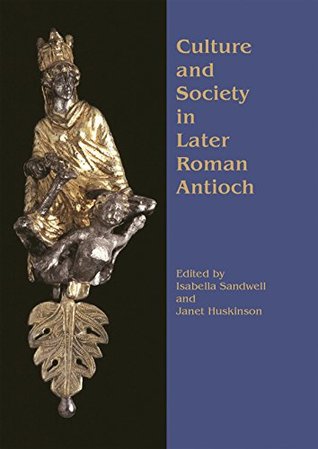
This collection of papers brings together a broad range of new research and new material on antioch in the late roman period (the 2nd to the 7th centuries ad), from the writings of the orator libanius and the preacher john chrysostom to the extensive mosa.
Ancient rome - ancient rome - the late republic (133–31 bc): the fall of carthage and corinth did not even mark a temporary end to warfare. War and military glory were an essential part of the roman aristocratic ethos and, hence, of roman political life. Apart from major wars still to come, small wars on the frontiers of roman power—never precisely fixed—continued to provide an essential.
Beginning in the middle of the second century bc, greek culture was increasingly ascendant, in spite of tirades against the softening effects of hellenized culture. By the time of augustus, cultured greek household slaves taught the roman young (sometimes even the girls).
Roman society was based on status, and civil rights followed this system. The latter were mainly either italians or provincial families that were rewarded for usefulness to rome.
When rome was in its ascendancy and at its height, the leaders of rome were all native romans or at least native italians. If they were born in other parts of the empire, they were of roman culture and had roman names and roman values.
By the first century, however, the need for capable men to run rome’s vast empire was slowly eroding the old social barriers.
In this paper i employ social network analysis to study female agency in the late roman republican period.
By the time of augustus, cultured greek household slaves taught the roman young (sometimes even the girls). Greek sculptures adorned hellenistic landscape gardening on the palatine or in the villas, and much roman cuisine was essentially greek.
The roman and arab empires and their influence on the world today religion, culture, and society itself find their roots in the people, not in the likewise, islam arose in the middle east several hundred years later, in the sevent.
During the principate (roughly 27 bce to 235 ce), when the empire reached its maximum extent, roman society and culture were radically transformed.
This collection of papers brings together a broad range of new research and new material on antioch in the late roman period (the 2nd to the 7th centuries ad),.
Culture and society in later roman antioch (none) paperback – illustrated, january 3, 2017 by isabella sandwell (editor), janet huskinson (editor) see all formats and editions hide other formats and editions.
The american founders clearly desired to emulate the best elements of the roman republic in the new republic, while avoiding the excesses that led its transformation into the roman empire. James madison in particular worried that the intemperance and extravagance of the later roman empire might also emerge in the new nation.
Haverford's major and minor in classical culture and society offers students the opportunity to explore to history, philosophy, archaeology, and more—as well as its impact on later cultural traditions.
Despite the ambivalence, nearly every facet of roman culture was influenced by the greeks, and it was a greco-roman culture that the roman empire bequeathed to later european civilization. As roman aristocrats encountered greeks in southern italy and in the east in the 3rd century, they learned to speak and write in greek.
The roman empire at its zenith in the period of the principate (roughly, 27 bc to ad 235) covered vast tracts of three continents, europe, africa and asia. It encompassed countless cultures, languages, climates and diets. It included nomads and sedentary farmers, primitive tribesmen and cultivated urbanites, bandits and platonic philosophers.
Start studying chapter 5, section 3 - rome and the rise of christianity; culture and society in the roman world - guided reading activity. Learn vocabulary, terms, and more with flashcards, games, and other study tools.
Culture and society in later roman antioch (none) [sandwell, isabella, huskinson, janet] on amazon.
Antioch was the fourth great city of the roman world, and yet it is often written off as a lost ancient city. Founded in 300 bc by seleucus i as part of his plan to colonize syria with greeks, the city had from its inception been home to greeks, macedonians, syrians, egyptians and many others.
Apr 10, 2019 late roman and christian relationships were at an intercultural turning tensions evolving from certain 'secular' aspects of late roman culture. That was an integral part of later roman society (cooper 2007.
Themes in roman society and culture� an introduction to ancient rome / edited by matt gibbs, milorad nikolic, pauline ripat.
The term refers to the culture of the roman republic, later the roman empire, which at its peak covered an area from present-day lowland scotland and morocco to the euphrates. Life in ancient rome revolved around the city of rome, its famed seven hills, and its monumental architecture such as the colosseum, trajan's forum, and the pantheon.
Roman society is often represented as one of social extremes - with the wealth, power and opulence of an emperor existing alongside the poverty, vulnerability and degradation of a slave.
Since the tool was mostly one the emperor used to control his subjects, its usefulness was greatest in the chaotic later empire, when the emperors were often.
The upper class consisted of aristocratic landowners and government officials, while most of the people in the lower class were slaves. Criminals, debtors, and prisoners of war were often condemned to slavery. Eventually, as many as one third or more of the empire's population was slaves.
Sep 21, 2020 later, more nations recognized the value of roman culture and came to adopt aspects of it in developing their own culture and traditions.
After all, roman society differed from present western society in some fundamental vices and virtues, developed in the hellenistic greek world from the late.
Post Your Comments: